Harvard University Asia Center, Harvard East Asian Monographs
Harvard University Press 2010
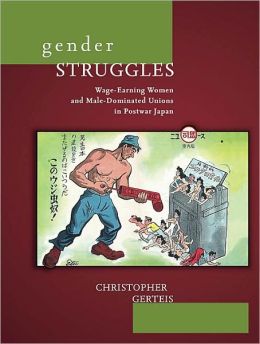
In the formative years of the Japanese labor movement after World War II, the socialist unions affiliated with the General Council of Trade Unions (the labor federation known colloquially as Sohyo) formally endorsed the principles of women's equality in the workforce and put in place measures to promote women's active participation in union activities. By the late 1950s, however, even Japan's radical socialist unions had reestablished the primacy of conservative gender norms, channeling women's labor activism to support political campaigns that advantaged a male-headed household and that relegated women's wage-earning value to the periphery of the household economy.
Second Prize Winner of the 2011 Triannual Book Award, European Association for Japanese Studies.
Reviewed in: American Historical Review; Japan Forum; Journal of Japanese Studies; and the Social Science Japan Journal.
Bloomsbury Academic 2013
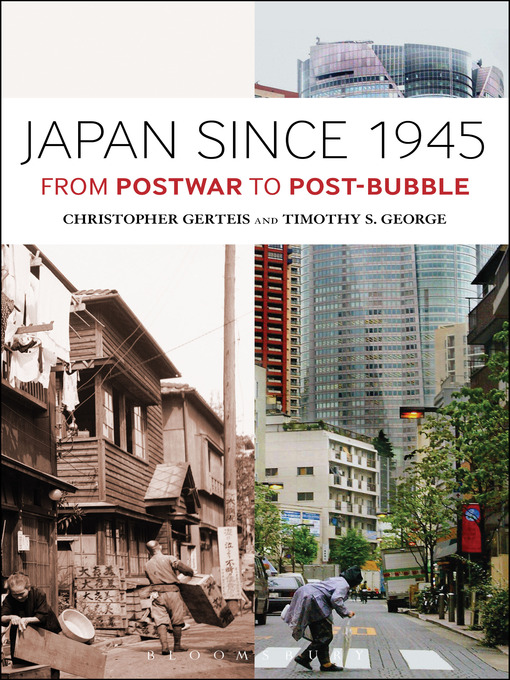
Japan Since 1945 moves beyond the 'lost decade' and 'terrible devastation' frameworks that have thus far defined too much of the discussion, offering a more nuanced picture of the nation's postwar development. The multidisciplinary essays that comprise Japan Since 1945 demonstrate its ongoing importance and relevance. Examining the historical context to the social, cultural, and political underpinnings of Japan's postwar development, the contributors re-engage earlier discourses and introduce new veins of research.
Reviewed in: Japan Forum and The Historian.
Brill 2013
The three volumes of this edited collection feature essays examining the economic and social transformations that redefined Japan from the proto-industrial economy of the early modern era to Japan's twentieth-century emergence as one of the world's great industrialized nations. The first volume, Tokugawa Economy and Society, examines how the political economy of the eighteenth and nineteenth century, despite political constraints designed specifically to hinder social and economic change, established the proto-industrial roots for Japan's rapid industrialization during the Meiji Era. The second volume, Meiji Industrialization, explores how the men who established the modern government of the Meiji Era (1868-1912) found fertile ground for the rapid industrialization they envisioned necessary for the defense of the nation. Their successes, and failures, laid the groundwork for a modern empire. The final volume, Twentieth Century Japan, examines the century of industrialization that underpinned the rise of Imperial Japan, its disastrous invasion of Pacific Asia, and its unexpected emergence from the ashes of World War II to become one of the world's great industrialized powers, a feat which has since fascinated politicians and industrialists across the developing and developed world.